

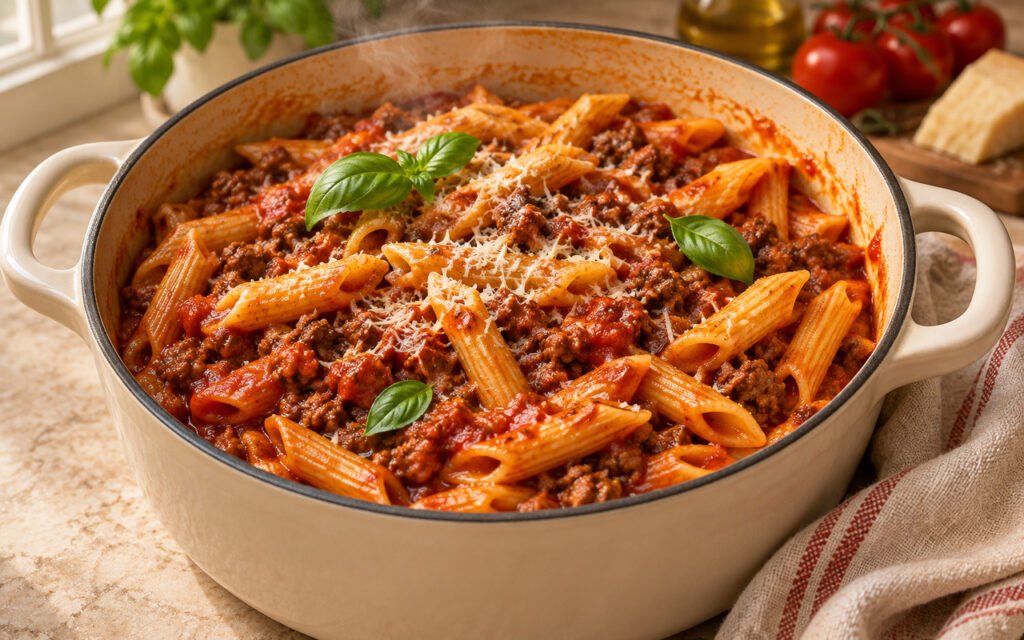
A satisfying pasta dinner does not need a sink full of dishes. This one-pot ground beef pasta with tomato sauce brings together browned beef, tender pasta, and a rich tomato coating—all cooked in the same pot.
The pasta goes straight into the sauce, absorbing flavor as it softens. Its starch helps thicken the cooking liquid, creating a sauce that clings to every bite without adding cream.
With everyday ingredients and a few simple checks along the way, this is a practical dinner for evenings when you want something warm and filling.
Recipe at a Glance
- Servings: 4 generous portions
- Prep time: Approximately 10 minutes
- Cook time: Approximately 25–30 minutes
- Equipment: A large, heavy-bottomed pot with a lid, a wooden spoon, and a food thermometer
- Measurements: US cups, with metric equivalents provided
Ingredients
- 1 tablespoon olive oil, if needed
- 1 pound (450 g) lean ground beef, also called beef mince
- 1 medium onion, finely diced
- 3 garlic cloves, minced
- 2 tablespoons tomato paste
- 1 can (15 ounces/425 g) plain tomato sauce, or approximately 425 g passata
- 3 cups (720 ml) low-sodium beef broth or stock
- 12 ounces (340 g) uncooked short pasta, such as penne or fusilli
- 1 teaspoon dried oregano
- ½ teaspoon dried basil
- ¼ teaspoon black pepper
- ¼ teaspoon salt, plus more to taste
- A pinch of red pepper flakes, optional
- ½ cup (120 ml) hot water, available if needed
- Grated Parmesan and chopped fresh basil, optional, for serving
Choose the right tomato sauce: Use plain canned tomato sauce or smooth passata. Here, “tomato sauce” does not mean ketchup. Tomato paste is the concentrated ingredient sold in small cans or tubes.
How to Make One-Pot Ground Beef Pasta
1. Brown the beef
Place the pot over medium-high heat. Add the olive oil if your beef is very lean, then add the ground beef.
Break it into small pieces with a wooden spoon. Cook for approximately 6–8 minutes, stirring occasionally so the meat has time to brown against the bottom.
If there is a large pool of fat, carefully spoon off the excess, leaving a little for the onion.
Food safety: Ground beef must reach 160°F (71°C), checked with a food thermometer. Color alone cannot confirm that it is safely cooked. FoodSafety.gov
2. Build the tomato base
Reduce the heat to medium. Add the onion and cook for 3–4 minutes, stirring, until it starts to soften.
Add the garlic and tomato paste. Stir for about 1 minute, keeping the garlic from burning. The paste should darken slightly and spread through the beef.
Pour in a little broth and scrape up the browned bits from the bottom. These add flavor; blackened, burnt bits do not.
3. Add the pasta and liquid
Add the remaining broth, tomato sauce, uncooked pasta, oregano, basil, pepper, salt, and optional red pepper flakes.
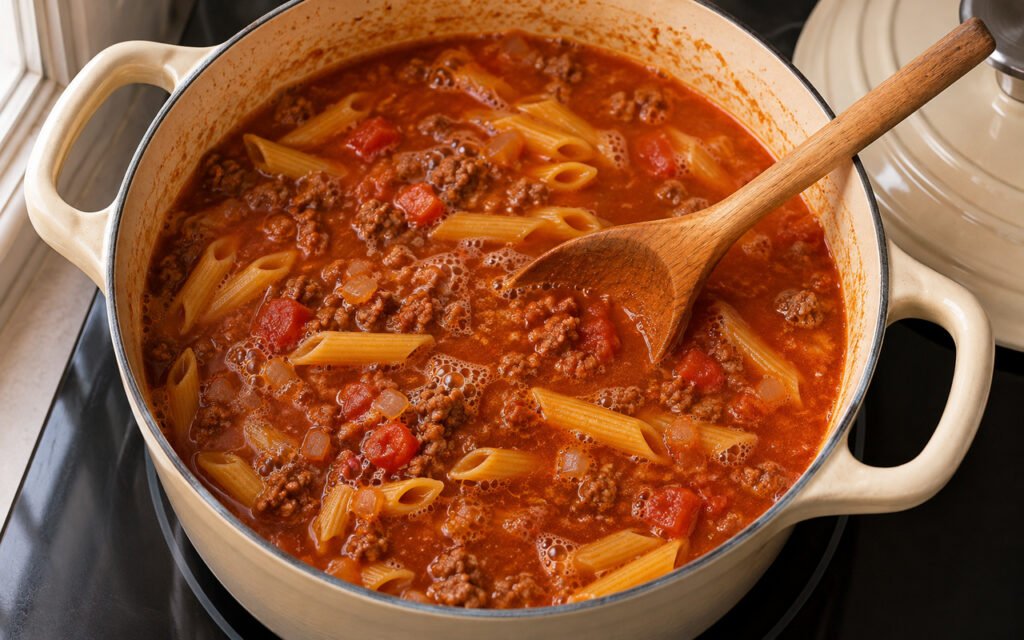
Stir thoroughly, making sure the pasta is distributed through the liquid. Bring to a gentle boil, then reduce the heat to maintain a steady simmer—small bubbles rather than vigorous boiling.
Partially cover with the lid.
4. Simmer and check the texture
Cook for approximately 12–18 minutes, stirring every 2–3 minutes. Scrape gently along the bottom to prevent sticking, and push any exposed pasta back into the sauce.
Start checking around the package’s suggested cooking time. Pasta can take longer in tomato sauce than in boiling water.
Taste a piece once the beef is safely cooked. The pasta should be tender with a slight firmness in the center, without a dry or chalky crunch.
If the sauce becomes thick before the pasta is ready, add hot water in ¼-cup (60 ml) increments. Stir and continue cooking, adding more only as needed.
5. Rest briefly and serve
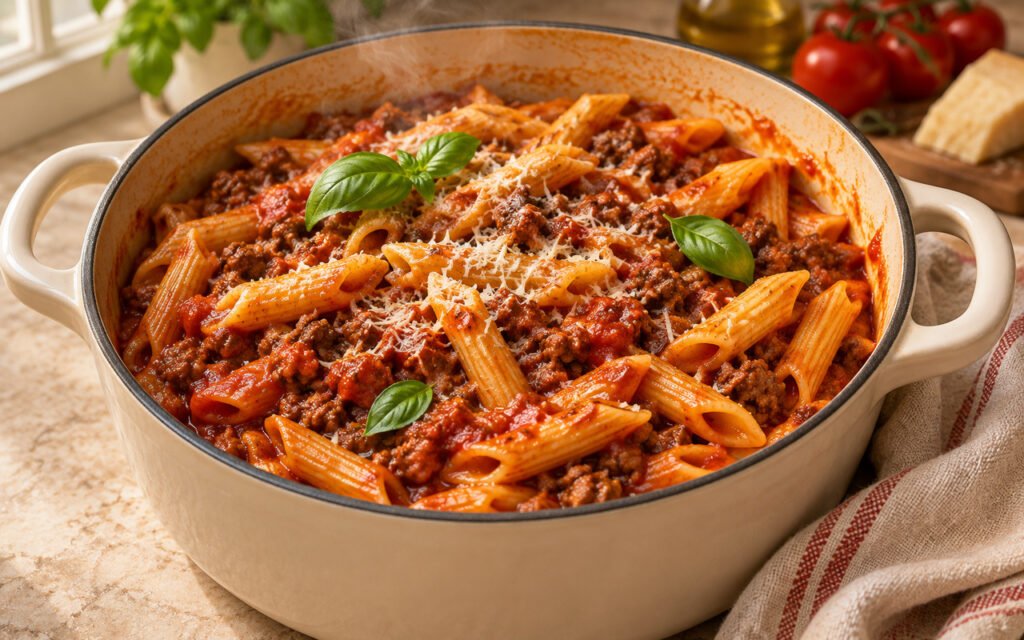
When the pasta is ready, remove the pot from the heat. The sauce should still look slightly loose because it will thicken as it stands.
Let it rest for 2–3 minutes, then taste and adjust the seasoning. Spoon into bowls and finish with Parmesan or fresh basil, if using.
Small Adjustments That Make a Difference
Keep the simmer gentle. High heat can evaporate the liquid before the pasta softens and may scorch the tomato sauce.
Use short, regularly shaped pasta. Penne and fusilli are easier to stir evenly through a thick sauce than long strands. Different shapes still need different cooking times.
Check before adding extra salt. Broth, canned tomato sauce, and Parmesan vary in saltiness. Adjust the final seasoning after cooking.
💡 Northivio tip: Keep hot water nearby before adding the pasta. A small splash lets you loosen a thickening sauce without interrupting dinner to boil a kettle.
Troubleshooting the Sauce
| What you notice | What to do |
|---|---|
| Pasta is firm and the pot looks dry | Add ¼ cup (60 ml) hot water, stir, and continue simmering gently. |
| Pasta is nearly cooked but the sauce is watery | Remove the lid and simmer briefly, stirring and checking frequently. |
| Sauce thickens too much after resting | Stir in a small splash of hot water before serving. |
| Food starts sticking to the bottom | Lower the heat and stir more often, adding water if needed. |
Avoid cooking tender pasta for several extra minutes just to reduce the sauce; it can become too soft. A short rest may provide all the thickening you need.
Storing and Reheating
Divide leftovers into shallow containers and refrigerate within 2 hours, or 1 hour if the surrounding temperature exceeds 90°F (32°C). Keep the refrigerator at 40°F (4°C) or below. You do not need to leave the pot out until it reaches room temperature. CDC
Use refrigerated leftovers within 3–4 days. Reheat only the portion needed, adding a splash of water to loosen the sauce, and check that it reaches 165°F (74°C) throughout. ask.fsis.usda.gov
Frequently Asked Questions
Can I use water instead of beef broth?
Yes. Replace the broth with the same amount of water. The sauce will have a lighter flavor, so taste and adjust the seasoning before serving.
Can I use whole-wheat pasta?
Yes, but it may need more time and liquid. Begin checking at the package’s suggested cooking time and add small amounts of hot water as needed.
Can I add vegetables?
Stir a handful of baby spinach into the pot during the final 1–2 minutes. For diced bell pepper, add it with the onion so it has more time to soften.
For your first batch of one-pot ground beef pasta, focus on the pasta’s texture and the amount of liquid left in the pot. Those two checks tell you when to add a splash of water, when to uncover, and when dinner is ready.